Tuesday, March 20, 2018

A Community with No Boundaries


I have been privileged to spend four decades in higher education. Each and every student who has crossed my path has taught me something. I hope I have offered a small teaching in return. But no learning experiences can match the growth that comes from an immersive, deep-diving international opportunity. This year, our Interfaith Medical Service Trip to San Lucas was perhaps the best illustration ever. Our group of twelve students came together 7 months ago to bond and to learn, to prepare themselves and to chart a course of service to the other. We prepared to join in bringing healing at the hands of our medical team, and to be in solidarity with the descendants of the great Mayan civilization.

But this particular team went above and beyond anything I had ever experienced. The community they created knew no boundaries. Each and every one could at any time step up to the plate to do what needed to be done, to lead and to follow. Each one extended a hand as we climbed the hill to the clinic, unloaded suitcases filled with hygiene packs and pharmaceuticals, and incredibly, though we only had one “count-off” that went smoothly, showed up on time and ready for service – every time!

Most of all, this team looked like the world community they were to serve. Our students came from continents around the globe, faith traditions that reflected journeys in dialogue with the Divine, and every hue of God’s created humanity. And the experiences they shared included Mayan spiritual ceremonies, a visit to the Holocaust Museum in Guatemala City and a meeting with the president of the Jewish community of Guatemala. Sabbath eve dinner in Antigua added young voices rising in wishes of Shabbat Shalom (a Sabbath of Peace) as hugs and embraces were exchanged around the festive table. New initiatives have been put into place for future trips to include meetings with the Imam serving the mosque in Guatemala City, and the potential collaboration with Padre Sergio, a Diocesan priest, doing incredible mission-driven work in Coban with the most economically and health impoverished young and old Guatemalans.

When you open your eyes to see interfaith, when you open your hands to do interfaith, and when you open your heart to feel interfaith, the world enters easily into your young soul. These young souls will yet bring peace to our fragile world. I am certain of it.

Rabbi Abie Ingber

Monday, March 19, 2018

Unbreakable Bond


My journey has finally come to an end and what an experience it has been. Prior to the trip, a lot of people kept telling it will be life changing. However, I was disappointed at first as it took a while for me to find out that I had been looking in the wrong places for this ‘life changing’ part. Recently, I came to realize all that just happened over the course of a week.

I just found myself a family out of complete strangers.

Having people that bring out the best in me, share laughs, go through challenges together and of course, celebrate our victories as one, has definitely been something worth giving up my spring break for.

Trajectory

Trajectory is a word that, before coming to Guatemala, I had only heard about in the context of projectile motion in physics class. It’s a simple enough concept- an object’s trajectory is the path it follows upon launch. But during this trip, the word trajectory has adopted an entirely new meaning in my mind. From two of our incredible teachers Rabbi Abie and Dr. Lauri, I’ve learned how simple things that we take for granted in the US can completely change the trajectory of a child- that is, their path of life leading to their destination.

On Tuesday, I worked with Rabbi Abie in glasses and had the privilege of finding the perfect pair of glasses for our patients to improve their vision. Having had poor vision as a child myself, I know the importance of glasses in order to better see the beauty and vibrancy of the world around us. But I had never given much thought about the importance of glasses in a more concrete setting - school. Children with poor vision can’t see the chalkboard in school so they don’t learn the material as well as the other students. Then they can’t answer the teacher's questions and to avoid being singled out, they go to the back of the classroom. Now, they really can’t see and have an even more difficult time and the teacher may even treat them like they are stupid. Eventually, they will believe they are stupid themselves and will lose their drive for learning. The students won’t ever live up to their full potential- be it a scientist, engineer or author- because they never got glasses. When we gave them glasses, we enabled them to excel in school. We changed their trajectory.

With Dr. Lauri, I saw even more profound effects of changing trajectory through the water filters known as Ecofiltro. Many of the families we saw drank tap water, and that unfiltered water is swarming with infectious agents, parasites and bacteria. The children of the community were especially prone to illness from drinking this water and would often get chronic diarrhea. They’d lose so many nutrients and end up falling off the growth curve- their trajectory for healthy growth and development. Dr. Lauri, with the help of our awesome translator, Diana, had the power to educate families about the importance of drinking clean water and connecting them to the Ecofiltros. It was astounding to see how something as simple as a water filter could bring a child from the lowest percentiles of developmental progress to thriving.

This trip has inspired me to look for ways to change the trajectory of those around me. I’ve learned that these life changing resources are often very simple and well known, all it takes is getting connected to these resources and the education on why they are so important. I’ve seen our medical team change the trajectories of our patients, but as a result of this incredible trip, the people of Guatemala have changed my trajectory to be a medical professional dedicated to educating and caring for those who are marginalized and forgotten about.


Prasun Shah

Tall, Dark, and Handsome


Today, I got to shadow Dr. Richard and then I worked with Rabbi Abie later in the afternoon. It was a particularly empowering experience for me as that day as I saw the importance of care and attention to detail. At the same time, I observed multiple cases of people suffering because whoever was responsible for their healthcare handled their work carelessly.

With Dr. Richard, I saw a man who was on a very strong pain reliever that produced large doses of cortisol in the body. However, the problem was that he was on the drug for so long we feared his adrenal gland was compromised because it had not been functional for a long time. It was such a great learning experience seeing Dr. Richard perform all sorts of diagnostic tests and from there explain to detail why whatever he said was so. Another interesting trend of the day was seeing how the patients just sat there with smiles on their faces as the doctors took their time to explain different things to us, mid-diagnosis. It was such an exemplary expression of patience, which, to me, is one of the most underrated virtues. This also made me very grateful to the Guatemalan people because they really were the true reason for the knowledge I gained.

Later in the day, I was working at glasses and I had a particularly emotional experience with a 96-year-old woman who was probably about 5 feet tall. She had less than 20/125 vision and could barely see a thing! After trying countless glasses to no avail we were at the point of giving up when I handed her the last pair and asked “mejor o peor?” then she replied “ooooo, PERFECTO!” The expression on her face made me remember my brother’s first words when he got his glasses; he said “is this what the world really looks like?” It was such a touching moment for me and it was that day I remembered how hard it is to fight back tears. I then stood up from the chair I was sitting in and then she realized I was about 6’3 and then she said “ahhhh, alto, Moreno y guapo!” meaning “tall, dark and handsome”. Wow, this 96-year-old woman just made my day!


Friday, March 16, 2018

The sun was intense, but I absorbed it all in.

The sun was intense, but I absorbed it all in.

Today we departed from Cincinnati to go to Guatemala. I strived to be on this journey for the past three years, and it was finally here. After applying to the trip three years in a row, this year was finally the year that I was able to apply the knowledge I have learned about health care, Guatemalan culture, and how to be an effective teammate.

As the plane landed in Guatemala, all I could see were mountains, colorful buildings, and a new landscape that I had been unfamiliar with. Everyone on the plane began to squeal with excitement, and the Guatemala team began to get restless to start the journey. Once getting off the plane and gathering the luggage, we stepped outside into the airport pick up. My first sight of Guatemala was of the hot sun overhead; next, I saw dogs lying in the sun near the terminal, children and their parents in beautiful colorful garments sitting on the sidewalk, and children playing soccer in and around the cars passing by. As the team packed up the luggage on the top of the bus and in the back of a truck, the sun was beating down and we were sweating, but it was almost like Guatemala was welcoming us with its warm presence and loving touch. I admired the people around me, and the excited, smiling faces.

After packing all the luggage, we drove away from the airport toward Guatemala City. The sun was still shining through the bus windows, and I smiled. The loving touch of Guatemala never ceased to be present, and I knew that this week was going to be amazing.

Thursday, March 15, 2018

Lost for Words...

This entire trip managed to encapsulate God/love for me. What else could be the very reason why I am so lost for words? “God is love; whoever abides in God, and God in him(1 John 4:16)” God to me is love. She is everything and nothing simultaneously. She is ultimate and unconditional love, joy, and happiness. She is peace.

I’ve seen a lot of love in the form of understanding, patience, and determination here in Guatemala. Every single person here has taught me something about life. Jose Roland taught me the importance of walking and talking in your purpose, and the “Je ne sais quoi” of following through. Dr. Eric taught me how far radiant and abundant energy can go; even in times of stress. Nurse Stephanie taught me how to let your fire burn: sagely and with grace. Lastly the people of Guatemala taught me resiliency, the power of collective work, and determination. In Guatemala my eyes have been opened and awakened to beauty in all forms, and seeing this here has allowed for me to be much more thankful for my life. It’s hard to be good person, especially when life itself consistently pulls you to be the opposite and everyone here somehow manages to try. Wow. Everytime I see God I am filled with such immense joy. So thank you Guatemala for showing me God/love in many different ways. Bless this beautiful country, that I am so honored to have stepped foot on.


Amber Minefee

Patience and Gratitude

I spent today with Rabbi Abie in Glasses. I was so very delighted to watch in amazement as most of the patients that we took in for glasses were capable of having their vision improved dramatically. Some patients we improved from being able to read no lines on the chart, to having perfect 20/20 vision. The patients who showed their appreciation eyes sparkled with joy with new glasses and usually began to speed up in reciting the lines. As I watched the patients show their childlike glee, my heart quenched with fullness because we could make people smile again. Sadly towards the end of the day, we began to run out of prescription glasses for the patients. I began to become frustrated because I wanted every patient to experience the joy of improved vision. Thankfully Rabbi Abie was by my side, and scavenged through boxes to make sure that every single patient possible could see after walking out of our clinic. We couldn’t help everyone, and I think the lesson that I learned today was the importance of patience when having a high need to control. If you’re anything like me you want to do the best that you can at all times, and when you can’t you feel as though that you’ve failed. Today I learned that it doesn’t matter what happens as long as you’ve tried your best. One of the biggest indicators of this is that to my surprise, even the patients that we didn’t help still left the clinic with a smile on their faces and grateful for our efforts. To the patients today, thank you for your patience and gratitude. I’m honored to have learned from you.


Amber Minefee

Another Day of Clinic!

Today I started my clinic experience outside, working at the dental station. As I started working, it was really cold outside, since the sun didn’t reach me yet. However, children began coming into the clinic with their families, and I called the children over to play and color with me. Little girls came running over with smiling faces, and little boys were talking to me in Spanish. Immediately, the chilliness from the air disappeared and I felt warm from the hugs and smiles I was receiving from my little ‘amigas' and ‘amigos.' The morning was so fun, and I strengthened my Spanish speaking skills by talking to Guatemalan families, and teaching them how to brush their teeth. In the afternoon, I spent time with the internal medicine doctor, Dr. Richard, and learned about how to examine patients and give them the best care. He gave each patient his full attention, and then spent time to teach each of us students about the diagnoses he was making. He taught me the importance of patience and active listening while seeing each patient, and I will most definitely take that into my medical practice in the future.

Back at the hotel, we were packing our lunches for the next day when suddenly, a hotel staff member told all the men on the medical team to leave the room; only the women could stay. From behind her back, she pulled out a big, beautiful bouquet of red roses with little tags on them which read, “Feliz Día de Mujeres!” (Happy International Women’s Day!), which would be the next day. There were many tears and hugs as each woman on the team embraced the woman passing out the roses. Each of us felt more empowered as women to take on anything we set our minds to, and the bond between us became closer. The men on the team were finally allowed in the room, and they got roses to, but without the tag :)

Today was a beautiful day.


Rachel Krevh

Tuesday, March 13, 2018

The Fruit of Months of Hard Work


My eyes slowly adjusted to the light coming from the plane’s window and what was unbearable whiteness dimmed and the details of the land below took shape like a freshly printed Polaroid picture. As I looked over Maddie’ shoulder trying to see as much as possible I caught a teary eye and she said “ugh my eyes are all watery, I’m so lame.” She was right in that there wasn’t any particularly eye-watering beauty in the random collections of houses and the occasional cement road winding around the mountainous terrain below. But it wasn’t the sight that brought my friend to tears, it was what it all represented: The fruit of months of hard work.

An hour or two later I got to meet two more members of our Guatemala family for the first time, Dr. Richard also known as the most agreeable man alive and José Roland who from first glance you know you’ve found someone as dependable as the sunrise.
We go on what must have been the best bumpy bus ride of my life. We finally reached our destination, and no matter how many times Nurse Stephanie tells you that the clinic is small nothing will prepare you for the improvised waiting rooms, or the parsimony of that Triage room or for the kids with their smiles looking at you like they’ve known you for years. We unpack everything and leave.

I have no idea of what is to come nor do I want to expect anything. I am by no means an empty canvas, engrained in me are countless scribbles that attempt to make sense, but I cannot wait to be painted nook to nook…hasta lunes!!

Growing in Ways I Did Not Know I Could Grow


This trip has changed my life in so many ways. Each person made an impact on my life. I have learned so much about Guatemala, medicine, and life. There are not enough words in the world to describe how thankful I am for this trip. Throughout the week the team has become my family. I love each and every one of them. We have shared so many different things, including laughs and tears.

As for our medical team, I learned so much from them. Dr. Lauri taught me about pediatrics and how much education is really involved in that. I never really considered going into pediatrics but now I would really like to work with kids. My favorite moment with Dr. Lauri was when she was talking about how the best thing is to reassure the mom that she is doing well. Dr. Lauri showed a mom of this little boy his growth chart and explained through Diana (one of our translators) that the boy was growing at a healthy, steady pace. The mom was overjoyed and the smile on her face was priceless. Dr. Lauri truly showed each patient compassion, which is what I hope to do with my patients.

Dr. Richard taught me to be a detective. Each of his patients seemed to have more than one health issue. He was able to put the pieces together. While spending time with him, I realized how much we take certain tests for granted. For example; in our Guatemalan Clinic, we did not have the luxury of a simple blood test or urine test can take an hour or two to process, as we do in the US. Instead, we had to go by what the patient was telling us and past medical diagnoses. One of the Dr. Richard’s patients who stuck out to me was a patient who had a glucose level of 638 (Normal is 70-100). We figured out that the patient was not taking her medication so Dr. Richard had to make sure the patient understood how serious it was to take her medication. He was able to stress to the patient’s mother that she had to care for her daughter and make sure her medication was taken each day. Dr. Richard helped me to realize that I enjoy being a detective to try to figure out how I can best help the patient.

Kristen and Stephanie are amazing nurses. I learned so many different things from them. I hope to be able to critically think on my feet like they can. They were able to be creative with the materials we had to be able to help the patients as much as possible. Being in triage with them made me realize how much nurses are able to do without the doctor. Dr. Richard said, “Nurses save more lives than doctors do.” This trip has showed me that. One of our patients collapsed on us and before any doctor got there Kristen and Stephanie had him awake and were taking to him. That just amazed me. I was able to use all of my nursing skills and it really confirmed why I want to be a nurse.

Dr. Eric taught me so many things about medications. I learned how to write scripts and the different dosages. I asked him so many questions. I asked him at least one question about every bottle of medication. He is so intelligent. I was able to be exposed to different medications and understand why doctors would prescribe one medication over another if they do the same thing.

Rabbi Abie taught me about life. There is so much in this world to know, you just cannot know it all. He taught me how to listen more than you speak. Every single person has a story and there is so much to be gained from all of those stories. My favorite quote of his is “The two most important days in your life are the day you were born and the day you find out why.” I found out on this trip that I am meant to care for people and love people. The little things are often the most important things.

Thank you everyone who played a role in helping me grow this week in ways that I did not know I could grow. Thank you for experiences and memories that will last a lifetime. Thank you for your kindness, wisdom, and compassion.

Just People Helping People


We’ve completed our time in the clinic as of Thursday, and it kind of breaks my heart a little bit; we’ve all fallen in love with the beautiful people of Guatemala. While I choked up as we pulled out of the clinic the very last time, the beautiful, kindhearted, hilarious, and brilliant people surrounding me kept me from shedding more than just a couple of tears. I’d like to share a few of the incredible moments I experienced both in and outside of the clinic.

I’ll start with our very first morning in the clinic. Both Adonis and I were assigned to shadow Dr. Richard. It is hard to express the plethora of information we absorbed in the five hours we had that morning. I will share three things I learned that morning that I will never forget. First, never do anything if you’re not going to do it right. Second, listen. Simply sit down and take the time to listen. Third, a bit more scientifically related, gout is a product of elevated Uric Acid levels most often determined by genetics. Shadowing Dr. Richard refreshingly redefined what it meant to shadow; it was the first time I ever felt involved in the diagnosis process or even understood the complexities of many common diagnoses.

Another incredible moment in the clinic occurred towards the end of the week while I was working in the glasses rotation. It is here where I felt the difficulties of participating in a medical service trip. After distributing dozens of glasses each day, we were running out of certain glasses that could help each patient because our supplies were limited. It was very difficult for me to tell the patient the best glasses we had for her weren’t going to perfectly improve her vision; I wanted to be able to provide the best to her because she deserved nothing less than the standard anywhere else. It is at this moment that the woman stood up and grabbed both of my hands in hers, looked me in the eye and thanked us for being here and doing what we were doing.

Even though I still wish we had a better glasses prescription for her, this woman demonstrated the understanding, gratefulness, patience, and humility of the Guatemalans we met throughout the week. José Rolando, our contact in Guatemala and an incredible community leader, said it best during our last reflection, “What you came and did wasn’t a mission trip; it wasn’t even a service trip. You were just people helping people this week.”

Monday, March 12, 2018

Last Day at the Clinic

If only this trip were two weeks long instead of one! What an incredible experience I've been given here in Guatemala. Learning from our amazing staff of nurses and doctors, interacting with and providing medical care to the Guatemalans, and spending quality time with my amazing team of peers, was more than I could have ever asked for. I got so much out of this trip medically, spiritually, and emotionally. I discovered that I prefer a fast-paced, intense, and ever changing environment that requires flexibility and critical thinking. I discovered that I can't ever and will never be satisfied with my knowledge base, but constantly searching and asking and striving to improve myself as first, a person, and second, a medical professional.

One day this week, when we had some free time, Shannon and I were discussing what gives human beings purpose to live. This wasn't an unusual topic, as most of our team often found ourselves engaging in deep and meaningful theological and philosophical conversations. After some discussion and reflection, I came up with the answer to what keeps humans living as human connection. Later in the week as I was reflecting, I realized that through the course of this trip I had developed a newfound understanding of the meaning of human connection. Yes, the main purpose of this trip was medical service, and With this I was able to practice my skills and further develop my medical knowledge base. But, that was not my main take away. Rather, I discovered human beings' capacity to engage in and formulate boundless spiritual and emotional connection that is beyond linguistic description. In regards to my team members and the medical staff, I was able to create a cherished and unique relationship with every individual person. Even greater, we created a culture amongst ourselves- one with so much strength and passion that you really felt that together, you could do anything. In regards to the Guatemalans at the clinic, despite a language barrier, despite the differing backgrounds and ways of living, and despite only having short interactions, connections were made with each and every patient who went through our clinic. To give a specific example, I had a special bond with a little girl named Natalie that I met on the first day of clinic. I only had a brief conversation with her, but every day after that she would greet me with a big smile saying "Maddie! Maddie!" each time she spotted me. The last day at clinic, on March 8, she presented Maggie, Rachel, and I with individual hand made cards wishing us a happy International Women's Day and saying how happy she was to have met us. Tears were shed when we had to say our goodbyes.

In other words, I was deeply moved by the ease and swiftness that the Guatemalans gave away their smiles, appreciation, and spirits to us Americans who have limited knowledge of who they really are and what they go through. I think this human connection that I have noticed and received in a new way so profoundly and deeply this week is, in fact, love. In the next couple weeks, as I enter a new stage of my life and begin a career as a nurse, I am encouraged by this unique aspect and ability of health care providers to connect with those they serve. I hope I am able to portray and engage in this skill even half as effectively as the Guatemalans and the medical staff that I have interacted with this week have. I am incredibly thankful for their example and teachings of how to love whole heartily and without fear or hesitation. I leave this trip feeling inspired, but nostalgic, encouraged but not shaken, and without a piece of my heart, which I left in Guatemala.


Madelyn Hayes

Sunday, March 11, 2018

To Capture the Rainbow

Where does one begin when so much has happened. I am faced with the same difficulty a painter faces when attempting to capture the full beauty of the rainbow. He is afforded all the colors necessary for such endeavor and a white, inviting canvas, but how? How can I mimic the shattering of light into an infinite number of colors? How will I explain to you, the mountains arrested in big brown eyes? How will I detail the smiles of cracked lips sweeter than a Guatemalan bread pudding? Where in the world of words will I find a phrase to describe the feeling in my heart so filled with wonderful humans. I cannot, but more importantly I refuse to reduce this experience to mere words. What I can do however is tell you of a girl named Natalie. A little girl in a red and white dress with a hair band, fearlessly walked up to Xavier students most of which do not speak the only language known to her, Spanish. But she who wore her heart not on her sleeve - oh no - but in every gesture, movement and glance - she who did so did not need words. She talked tirelessly, and when she was met, at times, with blank stares from us she did not stop but seemed to pick up speed and confidence. She wrote some of us a letter and kept others company while they waited in the twilight hours for the clinic to fully close up shop. She ran up and down the steep hill with us, she got in on our inside jokes and she joined us in our silly squad cheer. Most significantly however, is what she represented, for me at least. In a trip with lioness hearts like Mishel and Diana, in the presence of the ever-present Dr. Richard; in the reassuring proximity of our beloved Nurse Stephanie; and with many many other named and unnamed idols of this trip, a little kid in a red and white dress stands head and shoulders above all to teach us what love can be, what a word of kindness can do, and how to seize the world in tender palms so that the beauty of the rainbow may not be disturbed...


Adonis Hawari

Bienvenidos!

After landing at the airport, many emotions, ideas, people, and phrases have resonated with me. The first being the phrase, "Bienvenidos!" This phrase, meaning “Welcome!” was one I was unfamiliar with prior to arriving in Guatemala. I saw it on a billboard as I peered out of the bus window on the way to set up the clinic and asked some of the more fluent Spanish speaking teammates the meaning and pronunciation. It took me a long time to master the pronunciation, but, at that moment, the term could not more accurately describe my emotions. I felt warmed, not only by the sun, but from the beautiful people surrounding me; both those part of the team and those we were meeting in this new incredible place. The people of Guatemala embody a welcoming atmosphere full of an infectious joy.

Looking past the initial welcomes towards the medical service for the week, I recognize and am  intimidated by the immense tasks before us: providing medical care to people who may never had access to such care in the past, educating young children about proper dental care, filling prescriptions, and we are also striving to provide more than physical care. We will be holding hands with each other and our patients in prayer, solidarity, and love. In addition, we hope to instill a type of power that does not diminish, but empowers the people of this country. Together in partnership with the people of Guatemala we can try to repair the world and humanity a little bit and hopefully learn from each other along the way. I think that is one of things I am most excited about for the rest of the trip; building those relationships, connections, partnerships, and meaningful interactions with our patients because that is what will last when we leave. Hopefully, one day those connections and partnerships built together result in a prosperous, empowered, and self-sustaining community.


Shannon Cunningham

Coming to a Close

This week has been a whirlwind of emotions for me and everyone on this trip. I’ve laughed and cried harder than ever. Strangers touched my heart more than ever. Not only was my heart touched, but I was able to grow as a person. My hardest moment was when I realized that sometimes we don’t know what happens when our patients leave, and sometimes we cannot solve the problems we’ve had. This was really hard for me to process.

Juan is a patient that will always hold a special place in my heart due to the fact that he was the one who forced me to realize this. I had spent most of the day talking with him while I played with his granddaughter. Despite the language barrier he had a genuine interest in my life back home. Later that day he fainted in the middle of triage and was sent to the hospital. This hit home for me because he was fine the whole day. The next day, he came back to the clinic. When he saw me walk through the door he called me over and greeted me with open arms. He embraced me with a hug and told me he just needed someone to tell him that he was going to be okay. The hospital would not admit him without him doing lab test that would take days. This frustrates me, because he had already passed out 5 times in less than a week, and was having symptoms of a heart attack. I almost broke down in tears because we could not do anything to help him at the clinic with the materials that were available to us. I couldn’t stop thinking about what would happen when he left the clinic. Such a good man did not deserve to not have answers. Medicine sometimes fails us and that’s okay, but it’s something that we must realize. 

With this lingering in the back of my mind leaving the clinic on the last day was very emotional for me. I know that I would not be back in a week to check on his status. Facts like this make me never want to leave. Because of people like Juan and my team I have found my second home in Guatemala.


Lauryn Watson

Saturday, March 10, 2018

Touching Ground

Yesterday was insane. Landing in GUA was so much different than I ever could have imagined. Every five minutes I would look out of the plane in amazement. The terrain is so beautiful. Life seems so simple here. I watched children play on the street with a bottle on a string; while their parents pedal trinkets. The people are so welcoming here. Everywhere we go we are welcomed with open arms and smiles. This morning (Sunday morning) we went to the holocaust museum. It’s important to GUA Because history repeated itself in countries across the world. We also went to the square. It a was nice to see all the families feeding pigeons and the kids running around having fun. Next we went to the cemetery, which was really interesting. Many of the tombs were broken into. In fact we saw a femur on the side of path. José said it was likely the result of gang activity. It was really interesting to see the intentional separation between the rich and the poor in the cemetery. However since the contrary had become so over crowded over the years he rich and the poor lived together.

During this tour José taught us 4 very important lessons.
  1. We are always trying to separate our self from the other but we have to live with the other. 
  2. Don’t be greatful for what you have but for what they are. 
  3. Don’t work for the other work with the other. 
  4. Call the other by their name not the other.

Lauryn Watson

Moving Beyond the "Other"

"Be grateful for not what we have, but for what they are" - Jose Roland

We're standing in a cemetery looking out into the valley referred to as "the dump", where workers sift through the trash from the city to sell. As we look out, we are taken back by the immense growth of the trash in a mere 4 years, starting as a valley and quickly filling up to be even with the top where we stand. We are also distracted by the sun burning our skin and causing us to sweat. It is initially easy to feel pity on the garbage scavengers, living a life amongst the heat and garbage just to make it another day. One may also think, "Wow, I'm so glad I have been blessed with air conditioning and security in nutrition and finances". But, as we reflected, Jose Roland challenged this type of thinking. Rather than looking at these garbage scavengers as the "garbage scavengers", or the "poor" or the "others" that have lesser, resulting in us appreciating what we've been blessed with- what if we approached it a different way. What if, as we watched them work, we think about their past life that lead them to this lifestyle, and their present, of working day after day under the sun's burning rays amongst the people's unwanted leftovers. How amazing are they. Trekking on in the worst of conditions while being suppressed by the social and economic structure that prevents them from change their lifestyle, resulting in a seeming lack of hope. Yet, they wake up day after day, doing what they need to do to feed themselves and families. So much will and strength and dedication and love.

These reflections we had as a team lead me to my own reflections that challenge the motive for this trip. We didn't just come here to help the "others" who have less resources than we do. In fact, as we also discussed, the word "others" is problematic in itself, encouraging a further distance between ourself and those we serve. Rather, we came here to learn how to be incredible. We came here to learn how to grow and love and be thankful and have an incredible spirit for life, all without the materialistic things and resources that we've grown up with. We came here to learn how to be grateful for who they are. And let me tell you, they have so much to offer and we have so much to learn.

I feel excited and grateful and humbled to be in this beautiful country with its loving people. As we begin clinic tomorrow, I pray that with the short time I have with each patient, I can make even a portion of difference in the patient's life, of what this country and their people have already made on mine. Thank you to Jose Roland, the staff, and my team for keeping me centered and my motives in check as I begin the week in clinic.


Madelyn Hayes

An Opportunity to Grow

"Just because you don't know doesn't mean you aren't good enough, it means you have an opportunity to grow," said Stephanie Ibemere as we ended our first medical debrief. We have spent about 5 months preparing for this trip. We practiced medical skills, Spanish skills, learned about the Guatemalan culture, and developed as a team. As a team we have gotten so much closer and our friendships will last a lifetime. Today was the first day of clinic and I was ready.

I learned so much today. I began my morning in glasses with Rabbi Abie. really feeling like I still have my spanish skills because I got to use them because rabbi can’t really speak Spanish. My favorite patient was a woman who I did all by myself. Her eyes lit up and I don’t even know how to describe her thankfulness. I had no idea what I was getting into with glasses. I have never had glasses or contacts so I learned the different prescriptions.

In the afternoon, I was in triage. I loved it. As a nursing major, we are able to do these skills in clinicals in the US but here it is so different. Our patients are so thankful. One of our patients passed out as Maddie took his blood sugar. His eyes rolled in the back of the head and passed out. They had a pulse but he was having PVCs and so they think he had a heart attack. Kristen and Stephanie were amazing. Anyway, no one had aspirin until Osie ran down hill to get some. He got some aspirin and the ambulance was called. 

Kristen and Stephanie were able to critically think and I am striving to be that. I have the best teachers in the world. I have learned so much in clinic and it has only been one day. I just want to thank the medical team for all they do. I am ready to grow emotionally, spiritually, and in knowledge.


Margaret Sullivan

Muchísimas Gracias Guatemala

Be thankful not for what we have but for what they are. These wise words along with many others came from our incredible Jose Roland, the one who knows the people of Guatemala better than anyone. On Sunday we looked over a massive trash dump a few yards from a cemetery in Guatemala City and saw some of the most extreme poverty of the country. The scene looked like something from a sci-fi movie - dozens of vultures circling around in the air, smoke drifting upwards and an abyss of trash that extended deep into the valley. People were scavenging for hours under the intense sun through the depths of garbage hoping to find some treasures that they could eventually sell and earn some money from. This was their means of income. I had never seen anything like it and my instant reaction- like many others was to feel pity for them and be thankful for what I had- that I would never have to search through a dump in order to put food on the table. But Jose made me think differently.

He called me to appreciate and find the beauty in these hardworking and hopeful people who were doing what it took to support themselves. They had dignity and they had strength. Throughout my time in Guatemala I’ve looked for the beauty in what others may find ugly. Though the roads here may not be as well kept as in the United States and people live more simply- there is so much beauty in the spirit of the people of Guatemala. I have been blown away time and time again by the way they live their lives- with positivity, patience and generosity. During our days in the clinic I had the incredible opportunity to get a sense of the community that lives in the mountains of San Lucas. Each and every person I encountered, no matter how sick they were, greeted me with a warm hello and a smile. Their love of life was infectious beyond compare. Some patients would wait in the clinic all day to be seen by the doctor if it was busy. I’d lead them to the waiting area and even if they were there for hours, they would be so calm and content with waiting for their turn- they never complained and they never got upset with us. They were happy just to be there and it didn’t matter how long it took. Some would even hangout after they had been seen because the clinic like a watering hole for the community. Finally, the amount of generosity was overwhelming. It was so powerful to see people who have little give so much; they gave small gifts but beyond that they gave their time and their prayers. They were gracious and excited to help in anyway they could.

Our patients may have learned from our medical team; but they taught me so much more about the type of person I want to be. I hope upon returning to the US I am able to emanate this unparalleled, beautiful spirit of the people of Guatemala. Muchísimas gracias Guatemala, ojalá que nos veamos pronto.


Prasun Shah

Agua es Vida

As I am riding a bus along the base of Volcano Agua outside of Antigua I finally have some time to reflect on this year’s trip. Agua, water, water, water. It is easy to take for granted in our comfortable lives back in the United States how easy it is to get clean water. You can drink water safely out of the tap almost anywhere in the USA. Unfortunately the same is not true in places like Guatemala, and much of the rest of the world.

I met a little baby named Levi here a year ago. He was 6-months-old and had failure to thrive. With the help of my amazing interpreter, Diana, we talked mom through why his growth curve was worrisome and discussed practical ways she could get him to grow better. The family drank water out of the tap and all the kids suffered from chronic diarrhea. We talked about how they could get a water filter from Ecofiltro at a subsidized price and cautioned against Levi being given unclean water with his at-risk growth. I put Levi on my list of kids that I knew needed close follow-up. This year I had the pleasure of seeing him again. He is now a beautiful toddler and is thankfully back on the curve on the lower percentiles.

At least he is growing marginally better. But he wasn’t well. Mom brought two of her other 6 kids with her this year to see me. They all have chronic diarrhea, distended abdomens; the older ones often complain of headaches and dizziness. The family never got the filter, they still drink water out of the tap. Diana and I careful explained that all of her children are suffering from not drinking clean water. You can treat them all for parasites, amebas, the GI pathogens ubiquitous in unclean water, but as soon as they drink from the tap again they will once again get sick. I think she understood this year. It helped so much to have the few plots on the growth curve (a birth weight, last year’s weight, this year’s weight). I think when families see that plotted out and explained it helps to put it in context for them. I was not surprised she didn’t get a filter after last year’s visit. These families have lived off of unclean water for generations, they don’t change overnight.

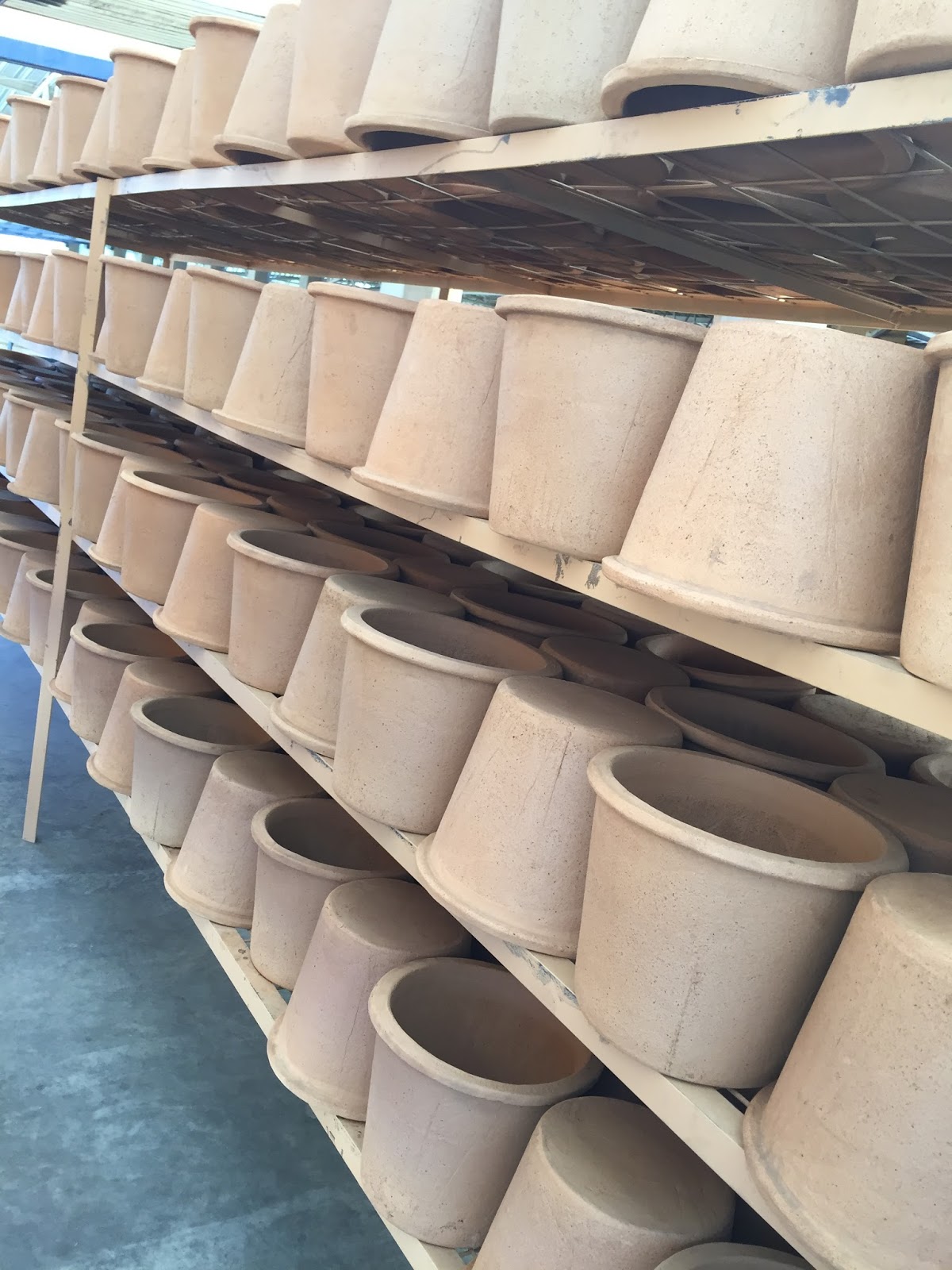
Today we just took the Xavier team to tour Ecofiltro, the factory where the filters are made. I have been here once before. A year ago in January Rabbi, Abie, Eric, our pharmacist and I came down to Guatemala for a scout trip. We were looking to plug into a new community to try to help them become more self sustaining with their own health over a period of years. When we toured the clinic in the town where Levi lives I asked the community health worker if the families drank clean, filtered water. She told me no and I knew at that point we had our work cut out for us. I told our Guatemalan host, Jose Roland that we can do very little good in a place like this without providing a way for them to get clean water. The next thing we knew we were touring a factory outside Antigua called Ecofiltro. They make water filters using clay, sawdust and silver - all materials harvested in Guatemala and manufactured in an environmentally sustainable way, organically using the sun and wind. The employees are not even allowed to bring junk food or soda to work. I love Ecofiltro. It gives me hope, hope for the lives of people in places like Guatemala. The technology Ecofiltro developed is used in 38 countries around the world.

The company agreed last year to help us in our work here. They come to our clinic and families can purchase a filter at a subsidized price - basically for the equivalent of buying bottled water over three months they will pay for the filter. The filter will last for two years. Needless to say, Diana and I asked every family last year and this if they drank filtered water. Last year none did, this year 5 families had filters. We made a dent. This year Diana and her super saleswoman skills was able to convince all of the families that we saw who didn’t have a filter to let her put their names on a list of families interested in getting a filter. Now Ecofiltro will meet with those families for further education about the filters and hopefully will sell some. We can change the trajectory of a community little by little (poco y poco). It is work, a lot of work, but it is worth it. It is life.

Here is the website link to Ecofiltro for more information:
http://ecofiltro.com/en


Lauri Pramuk, MD