Saturday, March 10, 2018

Touching Ground

Yesterday was insane. Landing in GUA was so much different than I ever could have imagined. Every five minutes I would look out of the plane in amazement. The terrain is so beautiful. Life seems so simple here. I watched children play on the street with a bottle on a string; while their parents pedal trinkets. The people are so welcoming here. Everywhere we go we are welcomed with open arms and smiles. This morning (Sunday morning) we went to the holocaust museum. It’s important to GUA Because history repeated itself in countries across the world. We also went to the square. It a was nice to see all the families feeding pigeons and the kids running around having fun. Next we went to the cemetery, which was really interesting. Many of the tombs were broken into. In fact we saw a femur on the side of path. José said it was likely the result of gang activity. It was really interesting to see the intentional separation between the rich and the poor in the cemetery. However since the contrary had become so over crowded over the years he rich and the poor lived together.

During this tour José taught us 4 very important lessons.
  1. We are always trying to separate our self from the other but we have to live with the other. 
  2. Don’t be greatful for what you have but for what they are. 
  3. Don’t work for the other work with the other. 
  4. Call the other by their name not the other.

Lauryn Watson

Moving Beyond the "Other"

"Be grateful for not what we have, but for what they are" - Jose Roland

We're standing in a cemetery looking out into the valley referred to as "the dump", where workers sift through the trash from the city to sell. As we look out, we are taken back by the immense growth of the trash in a mere 4 years, starting as a valley and quickly filling up to be even with the top where we stand. We are also distracted by the sun burning our skin and causing us to sweat. It is initially easy to feel pity on the garbage scavengers, living a life amongst the heat and garbage just to make it another day. One may also think, "Wow, I'm so glad I have been blessed with air conditioning and security in nutrition and finances". But, as we reflected, Jose Roland challenged this type of thinking. Rather than looking at these garbage scavengers as the "garbage scavengers", or the "poor" or the "others" that have lesser, resulting in us appreciating what we've been blessed with- what if we approached it a different way. What if, as we watched them work, we think about their past life that lead them to this lifestyle, and their present, of working day after day under the sun's burning rays amongst the people's unwanted leftovers. How amazing are they. Trekking on in the worst of conditions while being suppressed by the social and economic structure that prevents them from change their lifestyle, resulting in a seeming lack of hope. Yet, they wake up day after day, doing what they need to do to feed themselves and families. So much will and strength and dedication and love.

These reflections we had as a team lead me to my own reflections that challenge the motive for this trip. We didn't just come here to help the "others" who have less resources than we do. In fact, as we also discussed, the word "others" is problematic in itself, encouraging a further distance between ourself and those we serve. Rather, we came here to learn how to be incredible. We came here to learn how to grow and love and be thankful and have an incredible spirit for life, all without the materialistic things and resources that we've grown up with. We came here to learn how to be grateful for who they are. And let me tell you, they have so much to offer and we have so much to learn.

I feel excited and grateful and humbled to be in this beautiful country with its loving people. As we begin clinic tomorrow, I pray that with the short time I have with each patient, I can make even a portion of difference in the patient's life, of what this country and their people have already made on mine. Thank you to Jose Roland, the staff, and my team for keeping me centered and my motives in check as I begin the week in clinic.


Madelyn Hayes

An Opportunity to Grow

"Just because you don't know doesn't mean you aren't good enough, it means you have an opportunity to grow," said Stephanie Ibemere as we ended our first medical debrief. We have spent about 5 months preparing for this trip. We practiced medical skills, Spanish skills, learned about the Guatemalan culture, and developed as a team. As a team we have gotten so much closer and our friendships will last a lifetime. Today was the first day of clinic and I was ready.

I learned so much today. I began my morning in glasses with Rabbi Abie. really feeling like I still have my spanish skills because I got to use them because rabbi can’t really speak Spanish. My favorite patient was a woman who I did all by myself. Her eyes lit up and I don’t even know how to describe her thankfulness. I had no idea what I was getting into with glasses. I have never had glasses or contacts so I learned the different prescriptions.

In the afternoon, I was in triage. I loved it. As a nursing major, we are able to do these skills in clinicals in the US but here it is so different. Our patients are so thankful. One of our patients passed out as Maddie took his blood sugar. His eyes rolled in the back of the head and passed out. They had a pulse but he was having PVCs and so they think he had a heart attack. Kristen and Stephanie were amazing. Anyway, no one had aspirin until Osie ran down hill to get some. He got some aspirin and the ambulance was called. 

Kristen and Stephanie were able to critically think and I am striving to be that. I have the best teachers in the world. I have learned so much in clinic and it has only been one day. I just want to thank the medical team for all they do. I am ready to grow emotionally, spiritually, and in knowledge.


Margaret Sullivan

Muchísimas Gracias Guatemala

Be thankful not for what we have but for what they are. These wise words along with many others came from our incredible Jose Roland, the one who knows the people of Guatemala better than anyone. On Sunday we looked over a massive trash dump a few yards from a cemetery in Guatemala City and saw some of the most extreme poverty of the country. The scene looked like something from a sci-fi movie - dozens of vultures circling around in the air, smoke drifting upwards and an abyss of trash that extended deep into the valley. People were scavenging for hours under the intense sun through the depths of garbage hoping to find some treasures that they could eventually sell and earn some money from. This was their means of income. I had never seen anything like it and my instant reaction- like many others was to feel pity for them and be thankful for what I had- that I would never have to search through a dump in order to put food on the table. But Jose made me think differently.

He called me to appreciate and find the beauty in these hardworking and hopeful people who were doing what it took to support themselves. They had dignity and they had strength. Throughout my time in Guatemala I’ve looked for the beauty in what others may find ugly. Though the roads here may not be as well kept as in the United States and people live more simply- there is so much beauty in the spirit of the people of Guatemala. I have been blown away time and time again by the way they live their lives- with positivity, patience and generosity. During our days in the clinic I had the incredible opportunity to get a sense of the community that lives in the mountains of San Lucas. Each and every person I encountered, no matter how sick they were, greeted me with a warm hello and a smile. Their love of life was infectious beyond compare. Some patients would wait in the clinic all day to be seen by the doctor if it was busy. I’d lead them to the waiting area and even if they were there for hours, they would be so calm and content with waiting for their turn- they never complained and they never got upset with us. They were happy just to be there and it didn’t matter how long it took. Some would even hangout after they had been seen because the clinic like a watering hole for the community. Finally, the amount of generosity was overwhelming. It was so powerful to see people who have little give so much; they gave small gifts but beyond that they gave their time and their prayers. They were gracious and excited to help in anyway they could.

Our patients may have learned from our medical team; but they taught me so much more about the type of person I want to be. I hope upon returning to the US I am able to emanate this unparalleled, beautiful spirit of the people of Guatemala. Muchísimas gracias Guatemala, ojalá que nos veamos pronto.


Prasun Shah

Agua es Vida

As I am riding a bus along the base of Volcano Agua outside of Antigua I finally have some time to reflect on this year’s trip. Agua, water, water, water. It is easy to take for granted in our comfortable lives back in the United States how easy it is to get clean water. You can drink water safely out of the tap almost anywhere in the USA. Unfortunately the same is not true in places like Guatemala, and much of the rest of the world.

I met a little baby named Levi here a year ago. He was 6-months-old and had failure to thrive. With the help of my amazing interpreter, Diana, we talked mom through why his growth curve was worrisome and discussed practical ways she could get him to grow better. The family drank water out of the tap and all the kids suffered from chronic diarrhea. We talked about how they could get a water filter from Ecofiltro at a subsidized price and cautioned against Levi being given unclean water with his at-risk growth. I put Levi on my list of kids that I knew needed close follow-up. This year I had the pleasure of seeing him again. He is now a beautiful toddler and is thankfully back on the curve on the lower percentiles.

At least he is growing marginally better. But he wasn’t well. Mom brought two of her other 6 kids with her this year to see me. They all have chronic diarrhea, distended abdomens; the older ones often complain of headaches and dizziness. The family never got the filter, they still drink water out of the tap. Diana and I careful explained that all of her children are suffering from not drinking clean water. You can treat them all for parasites, amebas, the GI pathogens ubiquitous in unclean water, but as soon as they drink from the tap again they will once again get sick. I think she understood this year. It helped so much to have the few plots on the growth curve (a birth weight, last year’s weight, this year’s weight). I think when families see that plotted out and explained it helps to put it in context for them. I was not surprised she didn’t get a filter after last year’s visit. These families have lived off of unclean water for generations, they don’t change overnight.

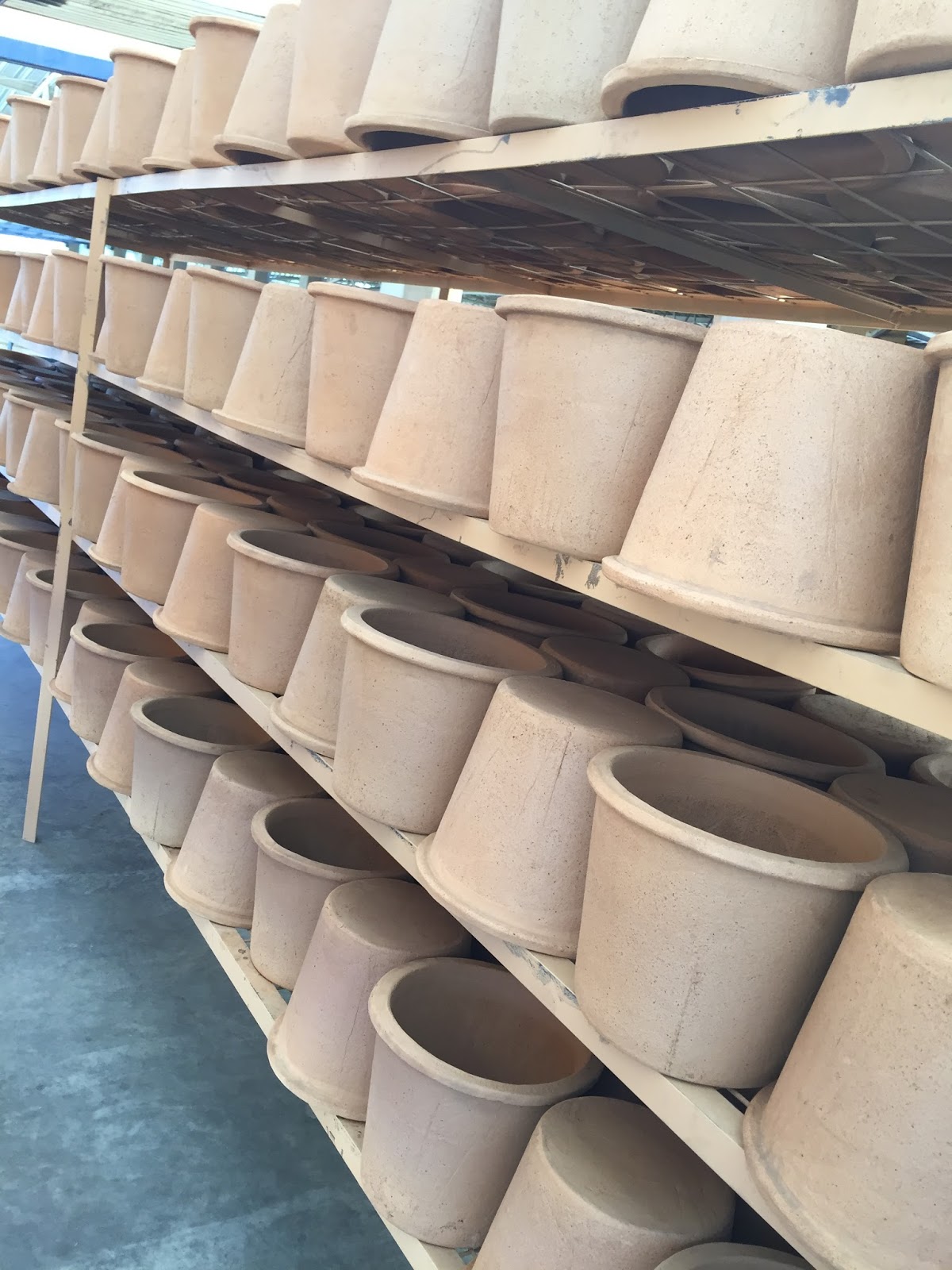
Today we just took the Xavier team to tour Ecofiltro, the factory where the filters are made. I have been here once before. A year ago in January Rabbi, Abie, Eric, our pharmacist and I came down to Guatemala for a scout trip. We were looking to plug into a new community to try to help them become more self sustaining with their own health over a period of years. When we toured the clinic in the town where Levi lives I asked the community health worker if the families drank clean, filtered water. She told me no and I knew at that point we had our work cut out for us. I told our Guatemalan host, Jose Roland that we can do very little good in a place like this without providing a way for them to get clean water. The next thing we knew we were touring a factory outside Antigua called Ecofiltro. They make water filters using clay, sawdust and silver - all materials harvested in Guatemala and manufactured in an environmentally sustainable way, organically using the sun and wind. The employees are not even allowed to bring junk food or soda to work. I love Ecofiltro. It gives me hope, hope for the lives of people in places like Guatemala. The technology Ecofiltro developed is used in 38 countries around the world.

The company agreed last year to help us in our work here. They come to our clinic and families can purchase a filter at a subsidized price - basically for the equivalent of buying bottled water over three months they will pay for the filter. The filter will last for two years. Needless to say, Diana and I asked every family last year and this if they drank filtered water. Last year none did, this year 5 families had filters. We made a dent. This year Diana and her super saleswoman skills was able to convince all of the families that we saw who didn’t have a filter to let her put their names on a list of families interested in getting a filter. Now Ecofiltro will meet with those families for further education about the filters and hopefully will sell some. We can change the trajectory of a community little by little (poco y poco). It is work, a lot of work, but it is worth it. It is life.

Here is the website link to Ecofiltro for more information:
http://ecofiltro.com/en


Lauri Pramuk, MD

Saturday, March 25, 2017

A Week's Difference

One week ago, I wrote about arriving in Guatemala and beginning our journey. Today we are heading home, with healed hearts, after being broken numerous times, and renewed hope. As I reflect on what this week has meant to me, I am in awe and I am still not quite sure how to put it in words. Before this trip, my hope for a better world was incredibly dim. I did not see much of love, or of God. Now I see God everywhere and I hear God in every waking moment.

The difference this week has made in my life is unforgettable. I see love everywhere now. I see God everywhere. I see God in my peers, who wore their hearts on their sleeves and fully threw themselves into this experience. I see God in the medical team, who are fully committed to their patients and taught us what it means to heal and be healed through serving others. I see love and God in the Guatemalan people, who do not let the inequality they witness everyday harden their hearts. These are God's people, who always end their conversations with "Vaya con Dios" (Go forth with God). They are rooted in their faith and have taught me what it means to be completely reliant on God and trust him. They have taught me to love abundantly, without hesitation or resentment. They have taught me to readily forgive. They give without expecting anything in return, and in that way, they have taught me to be more generous.

I am grateful that I was given the opportunity to be a part of this trip, of this journey. We have all said that our hearts broke a thousand times throughout the week, but it was put back together much stronger and much more capable of genuine love. I am grateful because I met some incredible people who are now like family to me and I could not have asked for a better team to with whom to have this experience. I know this week touched my soul because when I woke this morning, my first thought was, "I want to stay home". I've found a new home in the Guatemalan people.


Aichetou Waiga 

Tears and Joy

Our final day at Choacorral yesterday was met with both tears and joy. It was sad to say goodbye to all the patients, children, and community members, but we were all excited to reach out and help the community of Chapernas the following day.

After an hour long ride to Chapernas, I step off the bus and experienced a huge amount of culture shock. There were no paved roads, very few buildings, and a thin layer of dust covered everything. The school building that we were calling the clinic had no air conditioning, few lights, and a barely functioning bathroom. When I first walked into the clinic I could not belief the number of people that had showed up. The entire room was lined with men women and children, all trying to see a doctor.

I spent the morning with Dr. Lauri in pediatrics. It is so inspiring to watch how Dr. Lauri works. She always has a tremendous amount patience with the kids and easily diagnose patient after patient with confidence. Near the middle of the day I was running a script to the pharmacy when Brad pulled me into his room. Brad was a trained nurse who volunteer at this school made clinic twice every weeks, and he just happened to be from Ohio. The reason he pulled me into his room was to show me a very interesting case. When I walked into the room I saw a frail old woman sitting in a chair. As I moved further into the room I immediately realized why she came to the clinic. The woman, who was an astounding eighty-nine years old, was completely missing half of her nose. The skin and cartilage that should have been covering her nasal cavity was gone. Brad explained to me that the woman had small spec of skin cancer on the tip of her nose that went untreated and eventually resulted in her losing half of her nose. Now she comes in twice a week to get the area cleaned and bandaged.

What was heart breaking to me was the fact that had this woman lived in a more developed country that cancer spot could have easily been removed. While this woman may have lost part of her nose, she never lost her pride and determination. She held her head up high and managed to live ten years with the open sore. This woman showed me that when life deals you bad cards you can either complain and give up, or you can accept it and face it with a smiling positive attitude which she did.


Joseph Kavanagh

Where I Feel Called

Friday was undoubtably the most tiring and mentally and physically challenging day of clinic for me. Chapernas is a small village about 30 minutes from the coast in western Guatemala. As we drove into Chapernas we knew it would be different from Choacorral. The dirt roads, open air houses, and the type of illnesses varied vastly from Choacorral. Walking off the bus into 90 degree weather was not only a physical shock but when looking around i was shaken to the core. The two large buildings were basically just huge rooms that we took over and set up our stations at. We walked in the main building and it was packed with people waiting to be seen by our medical staff. However, when we turned the corner God blessed us with another pair of intelligent hands and a caring heart. Nurse Brad came into our lives as a surprise. He is an American nurse that does mission medical work in Guatemala and visits this site twice a week. He was just as surprised to see us as we were to see him. We worked seamlessly together to serve this huge population of people who needed medical care. I worked in triage all day. Hearing people's stories, investigating their health issues, and using nursing skills is my favorite part of triage. The fast paced atmosphere was especially difficult in this clinic. The heat paired with the amount of people and the acuity of the patients made the day especially hard. Working with Maddie and Xye was incredible. Our Spanish skills and nursing backgrounds prevailed and we were essentially done triaging by lunch time. However the most difficult things to witness was nurse Stephanie having to turn away patients. There were just so many people and not enough time or resources to see all of them. This was devastating but it shows how much continued efforts are needed.

My time in Guatemala has taught me more than I could have hoped. On Friday I learned, or perhaps rencountered, the fact that I, as one person, have the ability to change the world. If I changed or positively effected one persons life in the little town of Chapernus I did good. My last patient of the day was a old woman who had diabetes and was leaking, for lack of a better term, from her legs because of all of the edema and fluid retention. She had extremely low blood pressure but her blood sugar was only 175 without taking her medicine for her sugar for a number of days. This was not a problem of diabetes this was congestive heart failure. However, what I learned from this woman was not about her diagnoses, it was about the smile she had on her face when strangers were talking a foreign language surrounding her. It was about how her family advocated for her needs and care. It was about how her daughter was doing the best she could with what she had and was full of gratitude for our being there. My time in Guatemala was not about saving the people. These people do not need to be saved. They are strong, compassionate, loving , hospitable, grateful, and rich in life and love. They are different from the people I am normally familiar with, but that doesn't make them any less worthy of love and care. They need to be walked with not changed. Guatemala has officially broken and ruined me in the best way possible. This beautiful country and its people have changed the way I view health care and have possibly changed where I feel called in this world. They have taught me to love and wear my heart on my sleeve, that it is okay to ask for help, that vulnerability is not a weakness, and that it is more important to be rich in faith, hope, love, and community than in anything else. I am so grateful.


Melinda Birky

Wednesday, March 15, 2017

There Are No Secondary Causes

We all have special people who come into our lives and leave lasting impressions.  Father Vince O'Flaherty was one of those people for me.  I lived with Father Vince, a Jesuit priest, in my senior year of college at Regis University in an intentional faith community in a low-income Latino barrio in Northwest Denver called Romero House.  At age 70, Father Vince was our leader, living amongst 20-something year old college students, learning to cook for the very first time in his life, leading us by his example of selflessness.  One of the things he would always say was, "There are no secondary causes."  The gentle hand of God was present in all things for Fr. Vince.  This is a very Jesuit concept and I am grateful I learned this from him.

This week in Guatemala I have been reminded of that sentiment over and over again.  This is our seventh year on this trip.  The community we first encountered 6 years ago went from having never had a physician in their village to having a fully functional, independent clinic in that time span.  This year that community has 17 groups coming to volunteer this year.  And in a little over a year one of their young men, whom we met as a community health worker 6 years ago, will graduate from medical school in Guatemala and come back home to serve that clinic year-round.  So we made the difficult decision last summer that when we were planning for this year's trip we would probably be of better service to move on from our old village and start anew with a community who did not have so much help.  It was difficult to think of not seeing our wonderful families of Patanatic again, but they had many helpers at this point.

In a random act of God's gentle hand last summer Rabbi Abie met a phenomenal couple named Jose Roland and Lisa Monterroso.  Lisa is a Xavier graduate of the OT program and had met Jose Roland when she traveled with a Xavier OT trip to Guatemala several years ago.  The two fell in love and are now living and raising their two young boys in Jose Roland's native Guatemala.  When Lisa and Jose Roland were visiting Lisa's alma matter of Xavier last summer they met Rabbi Abie and the conversations about the medical service trip to Guatemala began.  Jose Roland - also known as Roland, then became our Guatemalan contact.  He started the work of identifying two new communities in Guatemala who needed services.  We could not have met a more generous and loving human being.  He identified two communities for us to start a relationship with, in hopes of giving them a gentle lift up in the next few years so that they can in the mean time identify people in their communities who can train as health workers to sustain their own communities.  Our hope is that over the next 10 years or so these two new communities can, with some help from our trip, become self-sufficient in their own health promotion.

In January, Rabbi Abie, Eric Bertelsen (our pharmacist) and I traveled to Guatemala for 3 days to meet with Roland and community leaders in these two new villages to see how we may best serve them.  Our first community is in San Lucas and has a government medical clinic but there is little to no staff for it.  When we toured the clinic I became aware that this community has no access to economical, clean, filtered water.  Without clean water it doesn't really matter what we could do down here - it would be like putting our fingers in the holes of a dike.  Water filtration has to become universal.  I told Roland that we needed to see how to bring clean water to these people.  The next thing I knew, a few hours later we were touring the factory of a globally known and respected manufacturer of home water filters called Ecofiltro.  Roland knew the factory owner, had called him up and asked him if we could come meet him.  We learned all about Ecofiltro and he learned all about our trip ideals of building capacity in communities so that they may become self sufficient in taking care of themselves.  The next thing we knew, Ecofiltro was donating water filters to our two new clinic sites and their schools.  And Ecofiltro agreed to come into the new villages and sell water filters to all the families for a very affordable, subsidized price.  So, probably over the course of 2-3 years those homes will all have free filtered water in their homes.  Even if we do nothing else in those two villages that will dramatically change the trajectory of their health.

Each time we have presented Roland with a new problem, he works at it and solves it.  He knows pretty much everyone in Guatemala and has a heart for helping - especially for helping people feel empowered to help themselves.  We were waiting in the bus at a bank one afternoon after clinic so the Xavier students could exchange some of their money.  I saw Roland warmly greeting two beautiful adolescent Guatemalan girls in their pristine school uniforms, who were clearly delighted to see him.  When he joined us on the bus I asked him who they were and he told me he had known them since they were toddlers.  They were HIV orphans and he knew them from the group home in which they live.  So, literally we go from him knowing the CEO of a major international water filtration company to these two HIV orphans.

Roland and Lisa walking into Rabbi Abie's office that day this summer was definitely the work of the gentle hand of God.  There are no secondary causes.


Lauri Pramuk, MD

A Kite Rises Highest Against the Wind, Not With It

Winston Churchill said, "A kite rises highest against the wind, not with it." That saying has often come to the fore in my life as adversity has entered. The great statesman was referring not only to a country, but to a community and to the individual person.

Nowhere is that more evident than in our Guatemalan community - with the beautiful Mayan people who line up outside the entrances to their clinic and to our Xavier medical family in each and every exhausting hour.

In the fall of 2016, a friend and colleague, Dr. Carol Scheerer, head of the Occupational Therapy Department, came to my office at Xavier. She wanted to introduce me to Jose Rolando Monterroso and his wife. Lisa Monterroso was an OT graduate of Xavier, who had met her now- husband on an OT trip to Guatemala. Jose Roland and Lisa were visiting Cincinnati with their two young sons, Lucas and Jacob.

Carol thought it would be nice for real Guatemalans to meet me, an honorary Guatemalan. Little did Carol know we were ready to move on from having accomplished our long term medical mission in Patanatik. In that Western highlands community we had totally transformed the community's capacity to take care of its own health care. It took six years, incredible Xavier students, medical colleagues and an inspired and dedicated community to achieve that goal. It was time for a new community and a new local inspired soul to handle our logistics and create a lasting bond with the local population.

Jose Roland was that man - thoughtful, capable, inspired and with a heart that could span from Guatemala to Ohio.

We entered into our relationship slowly, letting the gentle hand of God sew the disparate fabrics together. A mid-January preliminary visit only served to confirm that all of Guatemala was in his pocket. We had entered into his heart, as he had into ours.

The interfaith medical service week has now come and gone. All the planning, all the fundraising, all the medical education came together in a way that can only be described as magical. The 19 member team, supported by the  prayers and donations of hundreds, brilliantly executed our service trip. Hundreds of patients were seen and cared for, hundreds of pairs of glasses changed lives, but over and above it all, the twelve Xavier students were forever changed. They saw hundreds of community members, in native dress and Western attire, young and old, desperately sick or just needing an affirmation of relative good health, pass in front of them and enter into their hearts. These special descendants of a great, inspired Mayan tradition, taught them resolve and faith. It is a hard life in our two impoverished communities. It is a difficult daily grind to navigate the hillsides and the heat, the poverty and the bureaucracy. But every person they met flew their kite so high against the adversities they encountered. Not one patient noticed the slight hesitation in their blood glucose finger prick. Not one patient complained about the wait to see doctors or our pharmacist. Not one patient expressed concern as they tried on tens of used eye glasses to find their own 20/20 on our eye chart. Not one patient was frustrated with some of our team members' broken Spanish. Not one. Despite the daily adversities, caring for children and family took priority and found quiet resolution. Despite the adversity not one patient was bowed. Their faith, their love of family, their pride in their Guatemalan heritage lifted our spirits and brought joy to each team member. At the end of each and every day our exhausted team members found the strength for medical debrief and reflections. Tears of joy, compassion and growth lifted our spirits.

We will be back. The beautiful people of San Lucas and Chapernas have partnered resolutely with us. They want to help themselves. They want to sail their kites high. Our beautiful young people will hold the kite strings with them. God will provide the wind.


Rabbi Abie Ingber

Sunday, March 12, 2017

A Sunrise in Every Soul

For as long as I can remember, I think that I have known a few truths about the world, and the only people I can thank for this knowledge is my parents. When my sisters and I were little, we were fortunate enough that our Amma and Baba took us on adventures around the world, and these experiences in countries other than my own taught me more than I realized at the time. I had seen the reality of most of the world on trips to Pakistan ever since I was a few months old, and I had also seen the beauty of the world.

During the months leading up to our trip and our meetings, we learned about the realities we would see: the people we were preparing to serve lived lives much different than our own. As the type of human whose heart bent when she saw even a too skinny dog walking around outside the clinic in San Lucas, I knew this would be immensely difficult for me to see and experience in a more direct way than ever before. For this reason, I knew that I would have to seek the beauty of the world during my time in Guatemala.

Every morning since we landed in Guatemala City, I would wake up earlier than I should have. Partly because of the roosters that would would signal a too-early start to the day at 3 am but mostly to see the sunrise. The first day in San Lucas, I realized only after the world was suddenly full of light that I was facing the wrong direction and missed it. The next morning, I tried again but the mountains were blocking my view. On Wednesday, I woke up my lovely roommate Xye so we could find the sunrise together but our view was less than ideal. The same dilemma was the case on Thursday and Friday, but I did not want to give up.

This morning in Antigua, I woke up early again with Xye determined to finally accomplish my goal with my last chance. As we climbed onto the roof of the hotel to find the best view possible, we realized that the only thing we would see would be the light appearing behind a fluffy and almost impenetrable layer of clouds. As I began to feel a little disappointed that I still had not seen a Guatemalan sunrise in its beautiful entirety, I understood that this realization was completely wrong.

I saw the sunrise every day in our clinic in San Lucas playing futbol with the kids who  filled my heart with hope: they smiled no matter what words I strung together to say a sentence in Spanish and covered me with stickers of princess from head to toe. Though they did not have much, they were joyful and hopeful.

I saw the sunrise working in the glasses room in Chapernas: the light that illuminated each face after someone put on glasses and could finally see the world.

I saw the sunrise in every single soul I encountered that belongs to Guatemala.

I saw the sunrise through the amazing Dr. Lauri and amazing Dr. Richard, who showed me what selflessness looks like and taught me the most important thing about medicine: the people. And through Dr. Eric and his never-waning excitement and happiness. I saw the sunrise through Nurse Stephanie, who amazed me in more ways than I can could ever count and stopped to teach me the importance of believing in myself and who I am in the middle of a chaotic triage. Through Stephanie Renny, who handled every obstacle with grace and always made sure that we were all getting enough water. Through Roland, who instilled a desire to stay hopeful and to aim to make a difference with what I do. Through Diana and Mishell who never stopped smiling and talked to me about the importance of hope. And through Rabbi Abie, who allowed us to experience a Shabbat dinner together. My fellow students gave me the sunrise every day as we worked together and every evening during our group reflections, teaching me through their eyes.

If one of my goals of this trip was to see the sunrise, I think I saw it more times than I could have hoped. Because I learned that no matter how much darkness the world may see, the sun will always rise and fill it with light and hope.


Zenab Saeed

God's Good Works

Today was our last day in our clinic in Choacorral, and it didn't hit me how fast this trip has gone until I started saying goodbye to all of my patients. The experiences I have had these past few days will forever be ingrained into my heart. I have grown more as a person and learned so much more in this week in Guatemala than I have in the two years I've lived here. That's how impactful this trip has been for me.

Today was special because patients I had met earlier on in the week returned again and again and I began to see familiar faces. Specifically with one family, in which I developed a relationship with. I sat down with this family and learned who they were and what their story was. It was two sisters, their mother, and all of their children. In the thirty minutes I talked with them I found out that they walked over an hour and a half to get to the clinic, both sisters married young, at 15 years, and both sisters had kids at a very young age. I was astonished at the stark differences we had in that sense, I mean I'm 21 and barely am able to take care of myself, how could I ever take care of children, especially when I'm still a child myself?

It definitely left me pondering the whole day, but it also showed me how wonderful these women are and how strong they are to take care of not only themselves, but their families as well. The fact that they walked over an hour and a half just so their kids could be vaccinated is just astonishing, and by luck they were able to come on a day when we were here. However, I wouldn't call it luck, things happen for a reason in life. There was a purpose and reason for why I met that family and developed a relationship with them. In a way, it was God's way of showing himself to me, of demonstrating his good works. It was his way of showing that even in the toughest times and I don't think He's there, He really is, in moments like these.

So where do we go from here? That's the question we're always left pondering because we're only here for a limited amount of time. How will we know if the patients we attended to will be able to continue on without us? How will we know if they're able to buy their medication again after they've run out of what we've given them? Will it be too expensive? These questions have been circling in my head this week, and now that our journey is soon coming to an end, they've become more pertinent. Even though we offer care and medical attention to these people, I wish we could give more. I wish I could give more of myself to them, but in reality I can't, as much as I would like to.

Moreover, it breaks my heart that I won't be able to come back next year to see these wonderful people. It truly saddens me because it's through these people that I was able to see what I have to offer and what my calling is in life. As much as I've done for them, they have done way more for me, more than I could have ever imagined. I hope to see this relationship of our medical team with this town develop more profoundly, in a way in which the livelihood of the people are changed for the better; in a way that builds up the community to the extent that in future they will be sustainable and be able to thrive on their own, much like at our old clinic in Patanatic. I can only imagine the wondrous strides this town and this clinic will do for the people of the community, I can't wait to see what's to come in the near future for them.


Angela Ellis

Thursday, March 9, 2017

Privilege and Perspective

It has been a privilege to spend the past few days in Guatemala. I have already learned so much from the staff members accompanying us on the trip.  For example, Dr. Lauri demonstrated how to properly examine an eye and view the capillaries then allowed for me to practice the technique.  Nurse Stephanie reminded me that the clients are always the priority, no matter what is going on around you.  Stephanie’s actions reminded me of this when triage was a madhouse, but she managed to still provide a young boy, Wilmar, with attention and education while accomplishing other tasks.  Dr. Eric taught me the importance of a smile by always having a smile on his face and announcing how many hugs and kisses he receives in a day.  Rabbi Abie taught me about the brain’s great ability to compensate in incredible ways when sight is involved.  Stephanie Renny emphasized the importance of organization to maintain order, a necessity when several doctors and many many clients are involved.  Finally, Dr. Richard demonstrated caring for the whole person, not solely the physical aspect of a person.  It has been remarkable thus far to see how dedicated and engaged the staff members are, but also my fellow Xavier students.

Each day has been incredible, but today was by far the best.  I had the privilege of spending the morning with Dr. Eric in the pharmacy which allowed for me to further learn about medications, especially the different forms of insulin replacement therapies.  In addition to pharmacy, I was able to play with all the kids, help educate them about proper dental hygiene, and simply hold babies.  Something about holding a child puts all of life’s problems into perspective, especially in Guatemala; the mothers are so trusting and willing here.  Then, in the afternoon, I was afforded the opportunity to shadow Dr. Richard.  Shadowing Dr. Richard was certainly a treat due to his love for education and wealth of knowledge.  He is able to spout of information about cholesterol, thyroids, vascularization, etc. without even having to stop and think.  While I did greatly enjoy learning about Statin medications, the best and worst part of my day occurred during an interaction with a client.  On Monday, I had met a girl only a few months younger than me who loved Twenty-One Pilots, Fergie, and Coldplay, so naturally we rocked out to Fergie.  However, on Wednesday I learned that the same girl was faced with many life difficulties and was having physical symptoms because of it.  It was a hard pill to swallow that I hadn’t seen it on Monday, but it was a reminder that so many people have things going on that others know nothing about.


Madeline McGraw

Sweet Little Abraham

Wow. What an incredible three days. Between traveling to a brand new part of the world, with some amazing friends, to finding my sea legs in a small clinic in a new language, I’m exhausted. But a good, tired to my bones after three long hard days of work, tired.  I wouldn’t change this feeling for the world. In fact, I’d give anything to always feel this way.

Today went so smoothly for me in my little pharmacy corner and triage spot. Want to know why it went so smoothly for me? Because I have the best team in the world. I did not have to worry about trying to communicate medication instructions, because I have friends who actually studied Spanish (minorly regretting my choice to study French) and a pharmacist who might not know a lot of Spanish, but he knows the Spanish he needs. And yesterday, one of the best people on this planet stopped me and told me to essentially buck up, because I am a FREAKING NURSE. And you know what? I am. I’m this close “ “ to being a nurse. THIS CLOSE. I am a freaking nurse. And I might not know how to speak Spanish, but I know how to point, and they know what to do. And I have scripts, (which today I realized, I do not even need anymore.) I adapted. And I learned what I needed to learn to do what I needed to do. That moment yesterday of I have no idea how to say what I want to say and I want so badly to communicate with you almost paralyzed me. I could not have done it without the most blessed Stephanie Ibemere. What a super woman. Words cannot describe how much I appreciate the confidence boost that was. I will always remember that moment and that little baby who I was then able to triage. Sweet little Abraham. He might have spat up on me, but he never once stopped smiling at me, never knowing that he almost paralyzed me.

The love and the grace that I’ve experienced in the community astounds me. From my team, to my patients, I couldn’t do it without you. I am incredibly grateful to those patients who patiently waited for me point and scrape together words. To those patients who have given me hugs throughout the days, know that I will never forget those hugs. I love you Guatemala. God Bless you.


Michelle Indelicato

Pulled in a New Direction

Yesterday morning, I got to nervously eat my breakfast in anticipation for the dreaded shift in Triage. I kept running all the necessary tests, exams, and measurements I would need to take for every patient that made it through the clinic that day while trying to picture how if I would even be able to take a head circumference on a crying baby. My partner for Triage Katie held some similar pre-shift jitters and wanted to practice taking blood glucose and pressure to ease us into it. My blood pressure was on the high side, and all the healthcare professionals and my partner immediately started making me drink tons of water. The nerves continued to build up until our first patient.  We ran through all the steps, took all the measurements and asked any questions when we were uncertain. We successfully completed our first patient’s triage and then her family’s.  Triage had finally found some rhythm, no administration and paperwork problems were occurring, and we simply had less patients to see that morning. The pace was calm and organized and besides a few little mistakes, Triage was a great success for me. One baby even put my owl pen into her mouth so I would even go as far to say that I enjoyed Triage. The ambush I was expecting never happened, and my blood pressure stabilized. I was almost disappointed that I did not get to experience the crazy mess that Triage had been… almost…

I got to spend another afternoon with Dr. Richard Walter examining the adult patients to unravel any secret symptoms or events the patient to us that day. Working alongside Madeline, Dr. Richard Walter allowed us a more hands on approach with the patients. He let us look into ears and mouths while asking us to identify the tympanic membrane or the ear wax in the canal or comparing the sizes of tonsils in our patients. I even got to use the tongue depressor. After hearing a few of the interesting cases Dr. Richard had seen in relation to our patients’ symptoms, an eighteen year old came in with her sister.  Her sister explained many of the symptoms and a concern for her sister being depressed while showing an inspiring and heartbreaking concern for her sister.

The girl had complained of stomach pain, swelling, and a numbness of the face. Dr. Richard identified the likely cause of an infection, but he slowly took the time he needed to determine any possible explanation for face numbness.  He began asking her about any upsetting events that have occurred recently. After a little bit of time, she responded. Her life was hard. She had been suffering in many ways recently and more than a lot of people do. Dr. Richard described how these events in conjunction with the infection could further her symptoms and bring her to a worse state. Dr. Richard expertly advised the woman about counseling and seeking more resources and support for herself while she had the most gratitude for being a physician that actually delved deeper and explored her life to come to a wholistic, appropriate, and individual examination of this woman. This had not been the case for the previous doctors she had seen.

I couldn’t help but to keep thinking back to the fourteen year old girl that Dr. Lauri had seen the previous day with me shadowing. Caty had cerebral palsy and was completely blind. Her mother carried her all the way the massive hill that leads to the clinic. Caty’s hair, teeth, fingernails, and her clothing were all perfect which none of these especially the toothbrushing are easy tasks for a mother to perform on a child who has cerebral palsy. All I could see in this incredible mother was unconditional love for her daughter.  This superhero of a woman did everything she could for Caty alone. She was astounding. This profound love displayed by Caty’s mother and the love of our patient’s sister who picked up on a sudden change of emotion has been rolling in my head for the past few hours.

There are no coincidences is what the Mayan priestess kept saying. Our team and all of its members came here for a reason and that cannot be attributed to luck. I do not believe that I was in both of these patients’ rooms by chance. I feel like I’m being pulled in a new direction and am excited to explore it more fully whatever that may mean.


Evan Purvis

Gratitude and Joy

Two days in and I’m already overwhelmed with all that I’ve seen, heard, and done. After we arrived on Sunday, the nerves and anxiety associated with this trip began to sink in. I didn’t know how much help I would be, how well I would be able to communicate with patients, or if I would be able to make a difference at all. After yesterday and today I can confidently say that those worries have vanished. I can physically see the difference we are making in these people’s lives.

This difference comes in many shapes and sizes. Yesterday I saw it while working alongside Rabi Abie in glasses. Many of the elderly patients coming in had lived their whole lives without even knowing what good vision is. It was so rewarding to have a patient walk in nearly blind and leave with almost perfect eye sight. Even if we couldn’t improve their sight significantly, every single patient showed a tremendous amount of gratitude and joy. It really made me question how much we take for granted in the United States.

Another place I saw this difference was when I was shadowing Dr. Richard. While he taught me a lot about internal medicine, he taught me even more about doctor-patient relationships. The amount of time and energy he puts into each patient is truly amazing. Each patient was given so much attention and care. He never made a diagnosis or wrote a prescription without fully examining every aspect of the patient.   I would be lucky to be a physician as thorough and caring as him.


Joe Kavanagh

Wednesday, March 8, 2017

An Open Heart and Mind

"Enter this journey with an open heart and open mind," Megan wrote me in the journal she gave me before leaving. I didn't realize how meaningful this would be until I finally had the opportunity to work in the clinic these last two days. I started my morning working with Dr. Richard examining patients. Right from the start I knew it would be a busy day because although he had only scheduled 10 patients for today, he was told he would also be seeing some of the 21 diabetic patients who come to the clinic every month for a checkup. It wasn't long before we realized we would not get through half of these patients before lunch time. The four patients we saw that morning had complex situations that needed more than a simple examination, whether it was for extreme anemia, high blood pressure or from simply being completely confused about which medication should be taken and at what times.

Señora Clara Luz, a woman in her late 70s, was waiting outside of the glasses station when I called for her to see Dr. Richard. "Como se siente oí?" I asked her. "Muy feliz." She told me she was happy because we were here to help her with her vision and pain she had been having for a while now. We began by observing and asking questions about her medical history and her current health problems. It was inspiring to see how Dr. Richard was so patient and empathetic with his patients, even though he did not speak the language. After his evaluation, he decided to prescribe a medication she would be taking every day along with the one she already had. She explained that she would not be able to afford taking this medication every day and that she was just getting by with the one she was already taking. Often times we forget about the obstacles these individuals face every day. We forget that they may not have transportation to the city in case they are in need of more specialized attention or how difficult it is to arrange a trip there. We forget that they may work every day and can't afford to take a day off to see a doctor, and we forget how emotional this can be not only for us, but for the patients themselves.

Señora Clara luz was only one out of the many cases with challenges that we encountered these last days. Challenges that go beyond the science. We come as advocates for these people, as Dr. Richard said, giving them tools for better health. However, the people we have seen have also helped us. They have helped us see through a different lens and appreciate things we often take for granted. They truly have helped me open my heart and mind and I can only hope that we can continue to grow as we all embark this journey together.


Natalie Castillo

Tuesday, March 7, 2017

Why We Do What We Do

Today was our first day in the clinic and I'm at a lost or words. I was so excited that I was back in a country that I'm glad to call my second home. I spent two years of my life here and it's this country that has inspired me and pushed me to pursue a career in medicine, specifically global health.

Today allowed me to see a piece of what I could be doing in the future, and I couldn't have asked for anything better. I started off my day working in Spanish pediatrics with Doctora Patricia, who's experience and knowledge definitely transcended in the doctor's room. She was kind, loving and was extremely good with kids. She highly emphasized the importance of the growth curve and how mothers should always ask for them and know what they mean. While there was some difficulty in understanding her methods and trying to figure out how to incorporate our methods with hers when it came to the clinic, everything in the end turned out great.

The second part of my day included working with Dr. Lauri, another pediatrician. She was very informative and allowed us to be hands on, more than you could ever get in a shadow visit. She challenged us and got us thinking on important pediatric issues such as failure to thrive and what the child should be doing a specific age, such as being able to sit up by 6 months with support or babbling words near 7-8 months. As well, it was amazing to be able to spend time with the little babies who were absolutely adorable. However, among the many children we saw today, many were falling behind on their growth curves, either barely making on it or not even making it. It really brought to light the lack of nutritional foods that the kids have access to as well as fresh water.

Fresh water was something that Dr. Lauri highly emphasized and asked questions about for each family, because many of the root causes of the sicknesses and illnesses in children are caused due to drinking non purified water. She constantly brought up the clay water filters we have that were donated and that members of the community could buy for Q300 (~$43) which would guarantee them fresh water for several years.

Finally, my day ended working in glasses with Rabbi Abie. In particular, we had a specific patient who was 77 years old who was blind in one eye and could barely see in the other eye. She told us she has been considered blind since she was a child. After many trial and error runs, we were able to get to read 20/20 with the glasses and the expression on her face was priceless. She was amazed at the fact that she was finally able to see and it was so heartfelt that we all started to tear up and we shared a sweet moment with her.

This is why we do what we do. These people who come and sit for hours on end without complaining just to get basic healthcare offered to them are just incredible. That have offered more to me than I think I could ever offer to them. We are one with these people, no matter where we come from, no matter what religion or cultures we have, in the very core we are all human who deserve love and care.


Angela Ellis

Make it Work

Today was the first day in clinic and boy did it feel like a first day. There was so much to do and a lot of kinks to be worked out, but I am pleased to say that we did it. I believe that a big part of taking part in trips like this one is being adaptable, and with that, having the Tim Gunn “make it work” attitude. No matter the situation, first days always bring the unknown. No amount of planning and preparing can truly prepare you for a new experience. However, I am of the opinion that the right attitude can. Today was chaotic, but it was not pure chaos as it could have been, and I’m going to credit a decent portion of our success to the incredible attitudes that everyone in triage came to clinic with.

Please forgive my seemingly triage-centric blog entry, but since I spent both my morning and my afternoon in triage, I did not get to explore much of everything else that was going on and have to base my account of the day on what I saw and experienced. I’m confident that the passionate and persevering attitudes that I am describing were not specific to triage, but I can definitely say that they were crucial for our success. Deciding to make it work, whether “it” being blood glucose tests without lancet devices, or overcoming a language barrier, was something that we did. It was a Tim Gunn day and I can only see the week getting better and better from here.


Xye Inzauro

Language Isn't the Only Form of Communication

My day started waking up to a rooster at 5:59. An actual rooster call, like one you would see in a cartoon. As if that wasn't unreal enough already, I emerged from my room surrounded by beautiful volcanos. However, I'm not sure that the amazing landscape can compare to the amazing people I had the privilege of working with today.

At the clinic first day nerves set in right away. When we got there patients were already lined up waiting outside. I started my day setting up our pharmacy, but once we were waiting for the prescriptions to start rolling in Katie, another student on the trip, encouraged me to come with her to blow bubbles with some of the children waiting in line. They looked at us like we were a little crazy at first, but eventually they couldn't help but smile. Les burbujas were definitely a hit. I was nervous to interact with the kids (or anyone for that matter) because I don't speak Spanish, but this experience showed me that language isn't the only form of communication, smiles and laughter count just as much.

This was a wonderful start to my day because it gave me a small amount of confidence, and opened my eyes to a new perspective when working with patients as well. I spent the afternoon shadowing Dr. Richard, and I'm not sure that a pre-med student could even hope for a better shadowing experience. He exemplified what a doctor should be. He spent as much time on a patient as needed without worrying about time. This means he never let anything a patient said to him slip through the cracks. He listened to everything the patient was experiencing and was able to make the connections necessary to treat them. He did all of this while taking teachings moments for me, in order to make sure I understood why he was doing what he was doing. It was also inspiring to see him do this because he, like myself, does not speak Spanish. He had an amazing interpreter with him Mishell, but was still able to connect with his patients and give them the highest quality of care on a personal level. This was incredibly important for me because it reinforced the idea that I can still make an impact on someone's life, despite the barriers we may face. Clinic day one may have come to a close, but I can't wait to see what other surprises the week will bring.


Anna Klunk